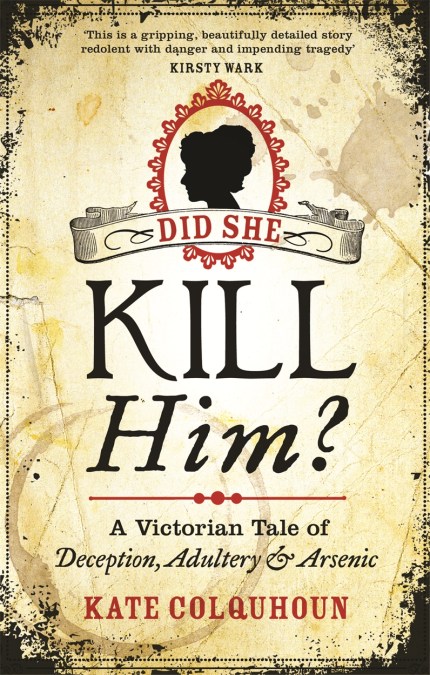
In the summer of 1889, young Southern belle Florence Maybrick stood trial for the alleged arsenic poisoning of her much older husband, Liverpool cotton merchant James Maybrick.
‘The Maybrick Mystery’ had all the makings of a sensation: a pretty, flirtatious young girl; resentful, gossiping servants; rumours of gambling and debt; and torrid mutual infidelity. The case cracked the varnish of Victorian respectability, shocking and exciting the public in equal measure as they clambered to read the latest revelations of Florence’s past and glimpse her likeness in Madame Tussaud’s.
Florence’s fate was fiercely debated in the courtroom, on the front pages of the newspapers and in parlours and backyards across the country. Did she poison her husband? Was her previous infidelity proof of murderous intentions? Was James’ own habit of self-medicating to blame for his demise?
Historian Kate Colquhoun recounts an utterly absorbing tale of addiction, deception and adultery that keeps you asking to the very last page, did she kill him?
‘The Maybrick Mystery’ had all the makings of a sensation: a pretty, flirtatious young girl; resentful, gossiping servants; rumours of gambling and debt; and torrid mutual infidelity. The case cracked the varnish of Victorian respectability, shocking and exciting the public in equal measure as they clambered to read the latest revelations of Florence’s past and glimpse her likeness in Madame Tussaud’s.
Florence’s fate was fiercely debated in the courtroom, on the front pages of the newspapers and in parlours and backyards across the country. Did she poison her husband? Was her previous infidelity proof of murderous intentions? Was James’ own habit of self-medicating to blame for his demise?
Historian Kate Colquhoun recounts an utterly absorbing tale of addiction, deception and adultery that keeps you asking to the very last page, did she kill him?
Reviews
A fascinating, meticulously researched book, full of period detail. Colquhoun's success in weaving together a series of complex topics is no mean feat and an even greater achievement is to have presented them clearly and simply
Colquhoun presents an absorbing picture of a society which would rather hang a woman, despite lack of evidence, than besmirch her husband's name
[Colquhoun] builds an almost unbearable tension into the events . . . This book is much more than a real-life murder mystery. Colquhoun has researched her subject thoroughly and presents a forensic account of the facts as known . . . Colquhoun spins a tale rich in detail and atmosphere, and her meticulous research never overshadows her obvious talent for storytelling
Kate Colquhoun has complicated and fascinating story to tell. She has researched the case well, reading the original trial transcripts and contemporary newspaper reports in addition to the many previous accounts of the Maybrick case
Accomplished biographer and social commentator Kate Colquhoun is taking on Victorian murder in Did She Kill Him? Conveying the hypocrisy and claustrophobia of middle-class life at the time it is likely to hit the spot with anyone who was intrigued by The Suspicions of Mr Whicher.
Intriguing, forensic . . . a moral fable of the age, intelligently told by Colquhoun, who places her sources cleverly within historical and literary context . . . gripping
Sensibly, if tantalisingly, Kate Colquhoun offers no final answers in her absorbing review of this old scandal . . . she highlights what the case can tell us about late Victorian England - its flawed legal processes and dangerous medical practices, its predatory appetite for gossip, and above all the uncertain position of its women. What Colquhoun reveals is a persistent doubleness - respectability concealing transgression . . . Restlessness, rather than complacency, characterises the society that she describes
A fascinating tale
Kate Colquhoun renders the story in a vivid, novelistic style . . . gripping
A fascinating, meticulously researched book, full of period detail. Colquhoun's success in weaving together a series of complex topics is no mean feat and an even greater achievement is to have presented them clearly and simply
Exhaustively researched and not for the faint-hearted. Her descriptions of the autopsy carried out in the victim's bedroom would make Kay Scarpetta wince . . . But there is another element that Colquhoun hauls blinking into the light: the changing moral climate of the time and the conflict between the patriarchal ancien régime and the emergence of the New Woman
Kate Colquhoun's account of the Maybrick case is brilliantly detailed - her knowledge of the uses and misuses of poison would put that of many pharmacists to shame
A perfect mirror of mid-Victorian morality
This is a gripping, beautifully detailed story redolent with danger and impending tragedy
[An] intriguing and forensic book
A real-life case as thrilling as any crime novel
The case is thrilling, the trial harrowing and Colquhoun does them justice
Colquhoun's account . . . is vivid and shocking . . . giving us a keyhole through which to peep into an era when gender relations were almost as toxic as the pick-me-ups that probably killed James [Maybrick]
[An] absorbing review of this old scandal . . . [Colquhoun] highlights what the case can tell us about late Victorian England - its flawed legal processes and dangerous medical practices, its predatory appetite for gossip, and above all the uncertain position of its women. What Colquhoun reveals is a persistent doubleness - respectability concealing transgression . . . Restlessness, rather than complacency, characterises the society that she describes
While [Did She Kill Him] is a carefully researched account, based on contemporary sources, it reads more like a novel
Accomplished biographer and social commentator Kate Colquhoun is taking on Victorian murder in Did She Kill Him? Conveying the hypocrisy and claustrophobia of middle-class life at the time it is likely to hit the spot with anyone who was intrigued by The Suspicions of Mr Whicher
Colquhoun presents an absorbing picture of a society which would rather hang a woman, despite lack of evidence, than besmirch her husband's name
Meticulously researched, this vivid account follows every twist and turn of the case that's threaded with adultery, poison and addiction. It kept me guessing to the end.
With deliciously dark elements of addiction, deception, torrid adultery and poison, this is the riveting true story of a sensational Victorian trial of 1889 . . . Colquhoun's writing has a wonderful slow burn to it, and until the final page, she keeps us guessing: guilty, or not guilty?
Enlivened by imaginative detail, Colquhoun's lively and perceptive narrative has the reader rooting for the friendless defendant
With deliciously dark elements of addiction, deception, torrid adultery and poison, this is the riveting true story of a sensational Victorian trial of 1889 . . . Colquhoun's writing has a wonderful slow burn to it, and until the final page, she keeps us guessing: guilty, or not guilty?
Kate Colquhoun renders the story in a vivid, novelistic style . . . gripping
A story rich in atmosphere
[Colquhoun] builds an almost unbearable tension into the events . . . This book is much more than a real-life murder mystery. Colquhoun has researched her subject thoroughly and presents a forensic account of the facts as known . . . Colquhoun spins a tale rich in detail and atmosphere, and her meticulous research never overshadows her obvious talent for storytelling
Kate Colquhoun has complicated and fascinating story to tell. She has researched the case well, reading the original trial transcripts and contemporary newspaper reports in addition to the many previous accounts of the Maybrick case
Colquhoun's account . . . is vivid and shocking . . . giving us a keyhole through which to peep into an era when gender relations were almost as toxic as the pick-me-ups that probably killed James [Maybrick]
Intriguing, forensic . . . a moral fable of the age, intelligently told by Colquhoun, who places her sources cleverly within historical and literary context . . . gripping
While [Did She Kill Him] is a carefully researched account, based on contemporary sources, it reads more like a novel
Enlivened by imaginative detail, Colquhoun's lively and perceptive narrative has the reader rooting for the friendless defendant
Meticulously researched, this vivid account follows every twist and turn of the case that's threaded with adultery, poison and addiction. It kept me guessing to the end
Lapping up the court reports, our forbears were "entertained and delighted". Present-day readers will feel the same
This is a gripping, beautifully detailed story redolent with danger and impending tragedy.
Exhaustively researched and not for the faint-hearted. Her descriptions of the autopsy carried out in the victim's bedroom would make Kay Scarpetta wince . . . But there is another element that Colquhoun hauls blinking into the light: the changing moral climate of the time and the conflict between the patriarchal ancien régime and the emergence of the New Woman
Kate Colquhoun's fascinating history . . . critiques thoroughly and carefully the attitudes of the time
A fascinating tale